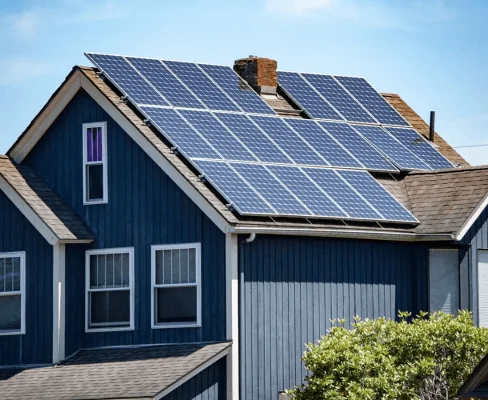
Energy costs across the UK continue to rise, and more homeowners are now looking at solar energy as a reliable solution to reduce their bills. Yet many people still wonder how solar panels actually work, especially in a country known for its cloudy days.
I’m David Fletcher, a renewable energy writer and consultant based in Bristol. Over the past decade, I’ve worked with homeowners and small businesses to plan and install solar systems that genuinely make financial sense. In this guide, you’ll learn how solar panels generate power, how they perform under UK conditions, and why they have become one of the most practical home investments in 2025.
What Are Solar Panels and How Do They Work?
Solar panels, often called photovoltaic (PV) panels, convert daylight into electricity. They contain small units known as PV cells, which are made from semiconductor materials such as silicon.
When daylight hits these cells, it knocks electrons loose, creating an electric current. This flow of electricity is known as direct current (DC). Since UK homes run on alternating current (AC), a device called an inverter converts the DC power into AC, making it usable for your household appliances.

Any electricity that is not used immediately can be stored in a battery or sent back to the National Grid for credit through the Smart Export Guarantee.
Think of it as your roof quietly turning sunlight into power you can use every day.
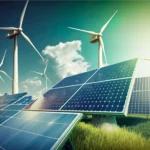
Do Solar Panels Work in the UK Climate?
Yes, they do. Solar panels do not need strong, direct sunlight; they need daylight. Even under overcast conditions, panels still generate power.
According to the Energy Saving Trust, UK solar systems typically produce between 850 and 1,100 kilowatt-hours (kWh) per installed kilowatt-peak (kWp) each year. In practical terms, a 4 kWp system can generate around 3,800 to 4,400 kWh annually, depending on your location.
Homes in southern England receive slightly more sunlight hours, while homes in Scotland or northern areas still achieve about 70 percent of that performance. With modern technology, efficiency losses in low-light conditions are much smaller than they used to be.
More than 1.7 million UK homes already have solar installations. That alone proves the technology works, even in our unpredictable weather.
Key Components of a Home Solar System
A typical UK solar setup includes the following components:
- Solar Panels (PV Modules) – capture daylight and convert it into DC electricity.
- Inverter – converts DC to AC for household use.
- Mounting System – holds panels in the best position on your roof.
- Battery Storage (optional) – stores unused power for evenings or cloudy days.
- Monitoring Software or App – tracks how much energy you produce and use.
Professional Tip: Choose an inverter with at least a ten-year warranty and ensure your installer is MCS-certified.
How Solar Panels Power Your Home
- Daylight hits the panels.
- PV cells create a direct current.
- The inverter converts DC electricity to AC power.
- Electricity runs your lights and appliances.
- Extra power is either stored in a battery or exported to the grid through the Smart Export Guarantee.
This simple flow allows you to generate, use, and potentially sell electricity directly from your roof.
How Much Energy Can You Expect from UK Solar Panels?
Your location, roof angle, and equipment quality all influence energy production.
| Location | Annual Output per kWp | Example for 4 kWp System |
|---|---|---|
| Cornwall | 1,100 kWh | 4,400 kWh / year |
| Midlands | 950 kWh | 3,800 kWh / year |
| Scotland | 850 kWh | 3,400 kWh / year |
A 4 kWp system can supply most of an average household’s annual energy needs, cutting bills by 40 to 70 percent depending on lifestyle and tariffs.
Factors That Affect Solar Panel Efficiency
Several factors determine how well your system performs:
- Roof Direction: South-facing roofs perform best, but east or west can still be effective.
- Tilt Angle: The ideal angle is between 30° and 40°.
- Shading: Trees and chimneys can reduce efficiency. Micro-inverters or optimisers help minimise this loss.
- Panel Type: Monocrystalline panels are generally more efficient than polycrystalline ones.
- Maintenance: Keep panels clean and clear of debris for consistent output.
A homeowner in Bristol recently achieved 85 percent of expected performance despite partial shading by using hybrid inverters. Good design matters more than perfect sunlight.
What Happens to Extra Solar Power (Smart Export Guarantee)
When your panels generate more electricity than you use, the excess goes to the National Grid. Under the Smart Export Guarantee (SEG), energy suppliers pay you for each unit you export.
SEG rates range between 5 pence and 20 pence per kWh, depending on the supplier. You can compare tariffs or store surplus energy in a battery to use later.
Reference: Smart Export Guarantee – GOV.UK
Is Solar Suitable for Every Home?
Solar power works best when certain conditions are met:
- You own the property.
- The roof faces south, east, or west and is not shaded.
- You plan to stay in the home for several years.
- Your electricity use is moderate to high.
It may not be suitable for rented properties, heavily shaded roofs, or homes with limited roof space. A professional installer can confirm feasibility with a free on-site assessment.
Maintenance and Lifespan
Modern solar panels require little upkeep.
- Cleaning: Once or twice a year, ideally in spring and autumn.
- Panel Lifespan: 25 to 30 years with gradual performance loss.
- Inverter Replacement: After 10 to 12 years on average.
- Battery Lifespan: 10 to 15 years depending on use.
Well-installed systems operate quietly and reliably for decades.
Frequently Asked Questions
Do solar panels work in winter?
Yes. Panels continue producing energy on cloudy winter days, although total output is lower due to shorter daylight hours.
How much sunlight do solar panels need?
They need daylight, not direct sunlight. Even diffuse light creates electricity.
Can I go completely off-grid?
It is possible but uncommon. Most UK homeowners remain connected to the grid for stability and to benefit from export payments.
Conclusion
Solar energy is no longer an experimental technology; it is a proven way for UK homeowners to save money, reduce carbon emissions, and gain control over their electricity costs.
A well-installed system can pay for itself within several years through bill savings and Smart Export Guarantee income.
If you want to learn about pricing and incentives, read the next guide:
How Much Do Solar Panels Cost in the UK (2025 Guide)
